

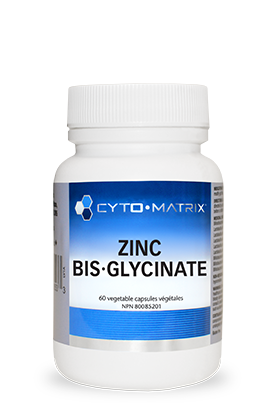
Zinc Bis Glycinate - 25mg Full Chelate
Please hurry! Only 2 left in stock


Description
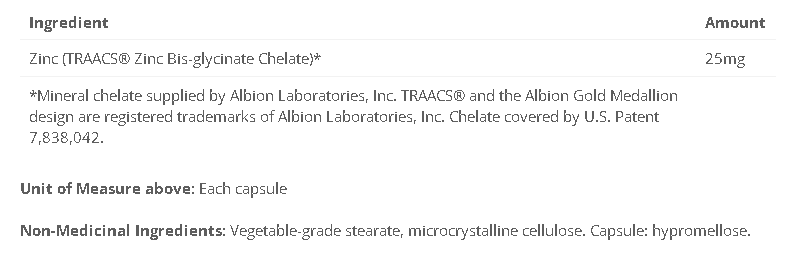
x- Chaque gélule végétale fournit 25 mg de zinc élémentaire sous forme de chélate de bis.glycinate pour une absorption et une tolérance optimales
- Indiqué pour renforcer l'immunité, équilibrer l'humeur, améliorer la santé de la peau, équilibrer diverses hormones et soutenir la vision
- Devrait également être envisagé chez les personnes âgées, les personnes souffrant de troubles digestifs, les végétariens, les femmes enceintes et les personnes qui prennent plusieurs médicaments sur ordonnance
Les personnes ayant des niveaux de zinc sous-optimaux présentent classiquement des symptômes de faible immunité, de cicatrisation altérée, d'affections cutanées et de mauvais goût. Cependant, ce ne sont là que les signes les plus connus d'une carence en zinc. Le rôle du zinc dans la santé globale est beaucoup plus complexe.
La réputation du zinc en tant que minéral stimulant le système immunitaire est bien méritée car il est nécessaire au développement et au fonctionnement normaux des cellules tueuses naturelles, des neutrophiles, des macrophages et de diverses cytokines. La recherche a montré qu'il est en fait capable d'empêcher la réplication virale dans les voies respiratoires supérieures, ce qui le rend particulièrement indiqué lors du rhume et d'autres infections.
En ce qui concerne l'équilibre hormonal, le zinc aide à stabiliser l'insuline et à réguler ainsi la glycémie. Il est également impliqué dans la santé de la thyroïde en augmentant la sensibilité des récepteurs à la triiodothyronine (T3). Enfin, chez les hommes, une carence en zinc peut affecter négativement les paramètres du sperme. Il a été démontré que la carence en zinc contribue à de faibles niveaux de testostérone.
Les autres indications cliniques de la supplémentation en zinc comprennent les troubles alimentaires (anorexie mentale et boulimie nerveuse), la dégénérescence maculaire liée à l'âge, la neuropathie périphérique diabétique, les ulcères gastriques, l'oligospermie et la dépression. Le zinc supplémentaire a fait l'objet de nombreuses recherches et s'est avéré bénéfique dans toutes ces conditions.
S'assurer que le corps a des niveaux de zinc optimaux est non seulement impératif dans les populations présentant les conditions cliniques susmentionnées, mais également dans les populations particulières qui, bien que non symptomatiques, peuvent avoir des besoins en zinc plus importants. Les populations ayant de plus grands besoins en zinc comprennent les personnes âgées, les patients souffrant de troubles digestifs, les végétariens, les femmes enceintes et les patients prenant plusieurs médicaments sur ordonnance.
Le bis-glycinate de zinc de Cyto-matrix fournit 25 mg de zinc élémentaire sous une forme de bis-glycinate entièrement chélaté pour une absorption et une tolérance optimales, avec un risque minimal de nausées, même chez les patients les plus sensibles.
Produits recommandés
Example product title
- $11.99
- $11.99
- Unit price
- per
Example product title
- $11.99
- $11.99
- Unit price
- per
Example product title
- $11.99
- $11.99
- Unit price
- per
Example product title
- $11.99
- $11.99
- Unit price
- per
Example product title
- $11.99
- $11.99
- Unit price
- per
Example product title
- $11.99
- $11.99
- Unit price
- per
Example product title
- $11.99
- $11.99
- Unit price
- per
Example product title
- $11.99
- $11.99
- Unit price
- per
Example product title
- $11.99
- $11.99
- Unit price
- per
Example product title
- $11.99
- $11.99
- Unit price
- per
Produits récemment consultés
Example product title
- $11.99
- $11.99
- Unit price
- per
Example product title
- $11.99
- $11.99
- Unit price
- per
Example product title
- $11.99
- $11.99
- Unit price
- per
Example product title
- $11.99
- $11.99
- Unit price
- per
Example product title
- $11.99
- $11.99
- Unit price
- per
Example product title
- $11.99
- $11.99
- Unit price
- per
Example product title
- $11.99
- $11.99
- Unit price
- per
Example product title
- $11.99
- $11.99
- Unit price
- per
Example product title
- $11.99
- $11.99
- Unit price
- per
Example product title
- $11.99
- $11.99
- Unit price
- per
- Choosing a selection results in a full page refresh.