
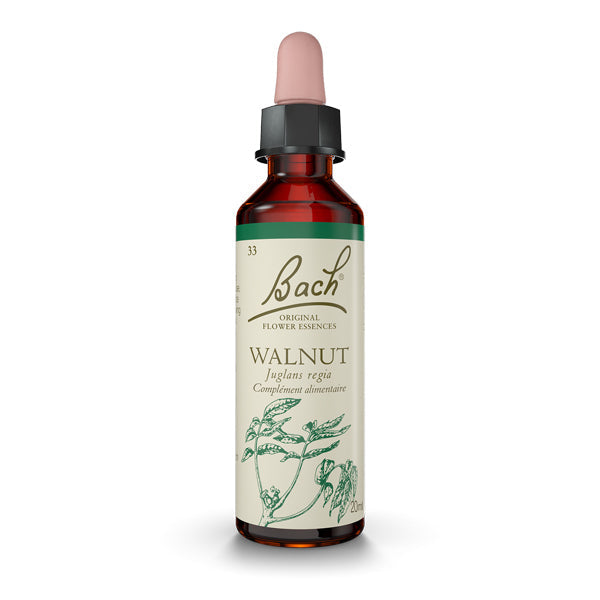
Walnut - Walnut
- 19.99$
0.00$- 19.99$
- Unit price
- per
Please hurry! Only 2 left in stock
Subtotal:
19.99$


Description
x- You feel that changes are not easy for you and you want to experience change well.
Walnut contains aqueous extracts of common walnut, also known as black walnut. In French, we generally speak of "common walnut," but this beautiful tree has many other names: Persian walnut, royal walnut, scallop tree, etc. Its scientific name is Juglans regia.
No one knows exactly where the common walnut tree originated. Some suggest Eastern European countries, while others believe it originated in Asia, where the tree has long been used for its medicinal properties. In any case, Juglans regia is now very common in France.
During your walks, you can recognize the common walnut tree by its large deciduous leaves measuring up to 20 to 30 cm. The trunk, an ash-grey shade, is very smooth in young walnut trees, but it becomes covered with deep cracks with age: the oldest walnut trees can live up to 300 years and reach a height of 25 to 30 meters.
In summer, the walnut tree is covered in flowers. The male flowers, which can have up to 36 stamens, grow grouped in elongated catkins. In other words, they form a kind of spike. The female flowers grow in smaller groups (2 to 4 flowers). They have a very particular shape, evoking the protective cocoon of the uterine cavity: an ideal place to develop in safety... As for the fruits of the walnut tree (the famous nuts), they appear in autumn.
Produits recommandés
Produits récemment consultés
- Choosing a selection results in a full page refresh.