



Description
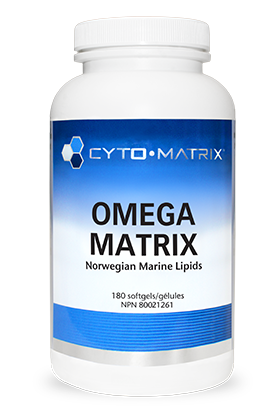
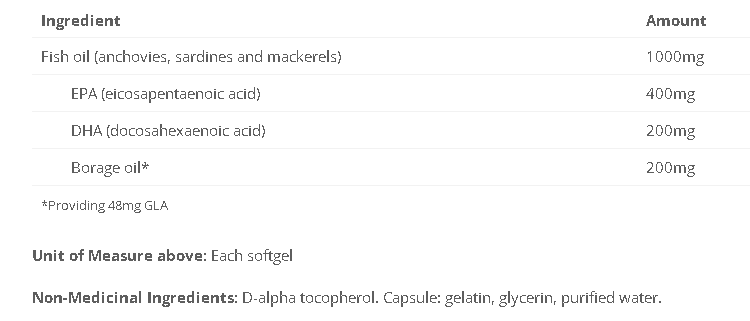
x- Chaque gélule fournit un minimum de 400 mg d'EPA et de 200 mg de DHA, provenant de sardines, de maquereaux et d'anchois sauvages norvégiens, avec de la vitamine E ajoutée pour une meilleure stabilité
- L'ajout de 200 mg d'huile de bourrache fournit une teneur en GLA de 24 % pour un total de 48 mg de GLA par gélule, ajoutant des propriétés anti-inflammatoires
- Indiqué pour les affections inflammatoires systémiques telles que l'arthrite, l'auto-immunité, le déclin cognitif, les troubles de l'humeur, l'eczéma, le syndrome prémenstruel et le syndrome de l'œil sec
- Distillation moléculaire pour garantir que le produit final est exempt de métaux lourds, de composés organophosphorés et de contaminants indésirables
- Disponible en flacons de 180 gélules
L'alimentation moderne a vu une réduction drastique de l'apport d'acides gras oméga-3, aggravée par un apport significativement plus important d'acides gras oméga-6. Ceci est problématique car beaucoup de nos tissus dépendent des acides gras pour une synthèse et une communication appropriées. Si les acides gras appropriés ne sont pas disponibles, les implications pour la santé globale sont vastes. En fin de compte, une carence relative en acides gras oméga-3 peut entraîner un état pro-inflammatoire et augmenter le risque de maladie chronique.
Les composés actifs responsables des avantages généralisés de la supplémentation en huile de poisson ont été identifiés comme étant l'acide eicosapentaénoïque (EPA) et l'acide docosahexaénoïque (DHA). Bien que les deux soient importants pour divers aspects de la santé humaine, l'EPA est généralement considéré comme un acide gras anti-inflammatoire tandis que le DHA est principalement responsable du développement neurologique et de la protection nerveuse.
L'EPA et le DHA ont été cliniquement étudiés dans une variété de conditions de santé. Par exemple, la supplémentation avec ces acides gras oméga-3 s'est avérée bénéfique pour la santé cardiovasculaire, la polyarthrite rhumatoïde, l'auto-immunité, la cognition, l'humeur, la santé de la peau et les problèmes atopiques, pour ne citer que quelques indications cliniques. En termes simples, l'EPA et le DHA doivent être pris en compte pour toute affection inflammatoire systémique.
Bien qu'un excès d'acides gras oméga-6 puisse être problématique, tous les acides gras oméga-6 ne doivent pas être vilipendés. Par exemple, l'acide gamma-linolénique (GLA) est un acide gras oméga-6 que l'on trouve couramment dans les graines de plantes telles que l'onagre, la bourrache et le chanvre. Lorsqu'il est fourni avec des acides gras oméga-3 tels que l'EPA et le DHA, la conversion du GLA en prostaglandine E1 est encouragée. La PGE1 a des effets anti-inflammatoires et a également la capacité d'induire la relaxation des muscles lisses. Plus important encore, les essais cliniques avec GLA ont démontré des avantages dans l'arthrite, l'eczéma, l'hypercholestérolémie, le syndrome prémenstruel et le syndrome de l'œil sec.
Omega Matrix est distillé moléculairement, sans l'utilisation de produits chimiques ou de solvants, pour assurer la pureté et l'élimination des composés nocifs tels que les métaux lourds et les composés organophosphorés. Omega Matrix comprend 400 mg d'EPA, 200 mg de DHA et 200 mg d'huile de bourrache par gélule. L'huile de bourrache contient 24 % de GLA pour un total de 48 mg de GLA dans chaque gélule. Des tocophérols mélangés sont ajoutés à la formule pour protéger et prévenir l'oxydation. Disponible en flacons de 180 gélules.
Produits recommandés
Example product title
- $81.99
- $81.99
- Unit price
- per
Example product title
- $81.99
- $81.99
- Unit price
- per
Example product title
- $81.99
- $81.99
- Unit price
- per
Example product title
- $81.99
- $81.99
- Unit price
- per
Example product title
- $81.99
- $81.99
- Unit price
- per
Example product title
- $81.99
- $81.99
- Unit price
- per
Example product title
- $81.99
- $81.99
- Unit price
- per
Example product title
- $81.99
- $81.99
- Unit price
- per
Example product title
- $81.99
- $81.99
- Unit price
- per
Example product title
- $81.99
- $81.99
- Unit price
- per
Produits récemment consultés
Example product title
- $81.99
- $81.99
- Unit price
- per
Example product title
- $81.99
- $81.99
- Unit price
- per
Example product title
- $81.99
- $81.99
- Unit price
- per
Example product title
- $81.99
- $81.99
- Unit price
- per
Example product title
- $81.99
- $81.99
- Unit price
- per
Example product title
- $81.99
- $81.99
- Unit price
- per
Example product title
- $81.99
- $81.99
- Unit price
- per
Example product title
- $81.99
- $81.99
- Unit price
- per
Example product title
- $81.99
- $81.99
- Unit price
- per
Example product title
- $81.99
- $81.99
- Unit price
- per
- Choosing a selection results in a full page refresh.