
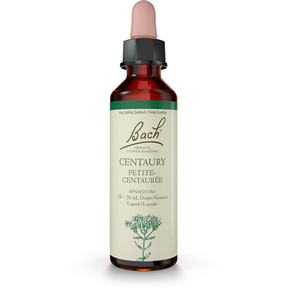
Centaury
- 19.99$
0.00$- 19.99$
- Unit price
- per
Please hurry! Only 2 left in stock
Subtotal:
19.99$


Description
x
- For the shy ones who don't dare, don't know how to say no, let themselves be dominated.
Centaury improves self-assertion and helps one follow one's own path. The small centaury, a common wayside plant, belongs to the botanical family of gentian, whose bitter flavor it has. With its discreet appearance, it is sometimes difficult to spot, especially before its pretty, soft pink, umbrella-shaped flowers bloom. They close as soon as the weather turns gray. It is the wind that disperses its tiny seeds. This self-effacement parallels the emotional states associated with the centaury elixir, intended, according to Bach, for those who "are so eager to help that they become servants rather than unpaid helpers. Their good nature leads them to do more than their share of the work, and in doing so, they may neglect their own special mission in life." Devotion and self-forgetfulness, weak willpower, and passivity are also character traits of the "centaury" personality, one of the twelve typical profiles defined by Bach. The remedy makes one aware of one's own desires, which allows one to assert them and say no when necessary.
“For kind, quiet, and gentle people who are excessively anxious to be of service to others and who abuse their strength in order to do so. This desire overwhelms them to the point that they become slaves rather than effective helpers. Their good nature drives them to accomplish more than their own workload, and they may, in doing so, neglect their own mission in life.” From the 1936 edition of “The Twelve Healers,” translated into French by C. Lévi and G. Wolf.
Produits recommandés
Produits récemment consultés
- Choosing a selection results in a full page refresh.